Whether you’re running an established facility or designing a new one, the most important decision you can make is to invest in a comprehensive warehouse safety plan.
The good news is that safety solutions in the material handling space can be both affordable and easy to implement. From netting to physical barriers, taking these steps helps to ensure the safety of both occupants and inventory.
No two warehouses are exactly alike, but the basics of a safe workplace remain the same. By identifying potential hazards and implementing practical safety measures, you can reduce the risk of accidents, protect your workforce, and keep operations running efficiently.
Here are five effective ways to make your warehouse safer.
1. End of Aisle Guards
Racking with End-of-Aisle Protection | Project by Mid Florida Material Handling
Before installing advanced safety systems, it’s important to protect the areas most vulnerable to damage. End-of-aisle rack protectors are one of the simplest and most cost-effective ways to reduce the risk of accidents in your warehouse.
As some of the highest-traffic areas in any facility, the ends of rack aisles are especially susceptible to forklift impacts. With forklifts constantly turning into and out of aisles throughout the day, even experienced operators can misjudge a turn, making collisions an ongoing risk.
End-of-aisle guards are designed to absorb these impacts before they reach your racking system. Securely anchored to the floor, they create a physical barrier that helps prevent structural damage, protects stored inventory, and reduces the likelihood of costly repairs or downtime. Best of all, they’re quick to install and offer a high level of protection for a relatively small investment.
2. Post Protection
Racking with Post Protectors | Project by Mid Florida Material Handling
While end-of-aisle guards protect the most vulnerable points of your racking system, rack post protectors provide targeted protection for individual uprights throughout the warehouse.
Forklifts frequently operate within pallet rack aisles, loading and unloading inventory throughout the day. Even minor impacts with rack posts can compromise the structural integrity of your racking, leading to expensive repairs and creating serious safety hazards.
Rack post protectors are rugged steel guards that shield individual rack uprights from forklift impacts. Installed directly around the base of each post, they absorb accidental collisions before damage can occur to the racking itself.
When used together, rack post protectors and end-of-aisle guards provide comprehensive protection for your pallet racking system, significantly reducing the risk of impact damage while helping to extend the life of your warehouse infrastructure.
3. Safety Netting
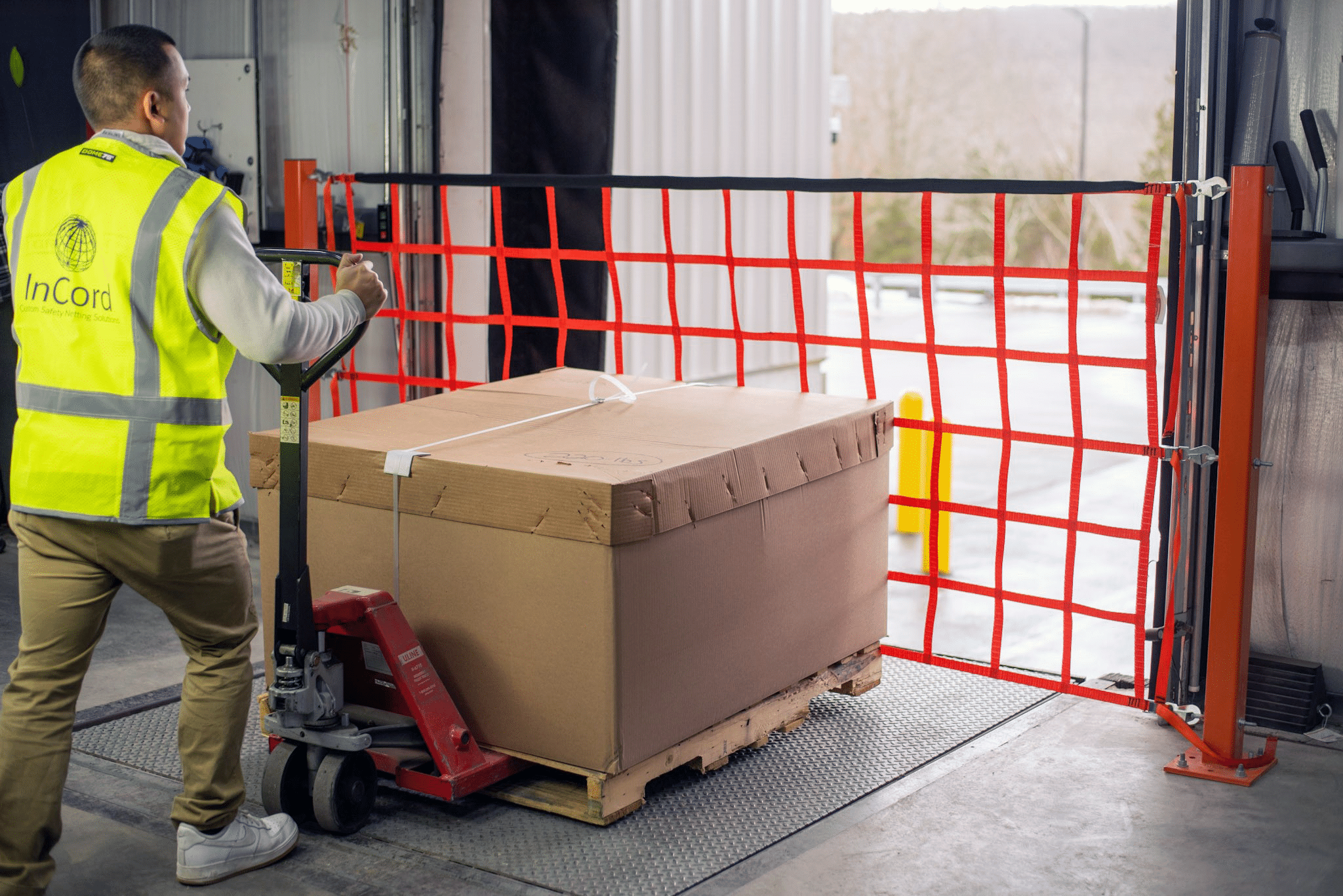
InCord Brand Dock Safety Net
Falls and falling objects are among the most serious hazards in any warehouse. Inventory can be pushed from pallet racks, materials can fall from elevated conveyors, and employees can be at risk of falling from unprotected loading docks or hatch openings.
Similar to the other safety solutions discussed above, safety netting is affordable, easy to install, and provides an effective layer of protection with minimal disruption to warehouse operations. These systems help prevent accidents by creating a physical barrier that keeps people, products, and equipment safely contained.
Rack nets prevent items from falling from pallet racking, conveyor nets catch materials before they reach the floor, dock nets help protect employees and equipment around elevated loading areas, and hatch nets secure openings during maintenance activities.
By addressing multiple fall hazards throughout a facility, safety netting is a simple yet highly effective way to improve warehouse safety and protect both employees and inventory.
4. Guardrails
Guard Rail Installation by Mid Florida Material Handling
While rack protectors and end-of-aisle guards are designed specifically to protect pallet racking systems, guardrails provide broader protection throughout the warehouse. They are used to shield areas where forklift and lift equipment impacts could damage critical infrastructure, disrupt operations, or create safety hazards.
Common applications include protecting pedestrian walkways, office areas, windows, electrical panels, machinery, charging stations, conveyors, and other valuable equipment. By creating a physical barrier between vehicle traffic and vulnerable areas, guardrails help prevent accidental collisions before they happen.
Built to withstand impacts from forklifts and other lift equipment, guardrails provide a durable line of defense that helps protect employees, equipment, and facility assets. Strategically placed guardrails can improve traffic flow, define restricted areas, and create a safer, more organized warehouse environment.
5. Annual Pallet Rack Inspections
Regardless of how proactive you are about preventing impacts, falls, and other warehouse hazards, regular safety inspections are essential. A professional inspection should be conducted at least annually, as well as immediately following any known incident, such as a forklift impact or other event that could affect your warehouse equipment.
Rack systems are engineered with specific load capacities and structural requirements, meaning even damage that appears minor can potentially compromise the integrity of the system. Bent uprights, damaged beams, or other issues may not always be obvious, but they can create serious safety risks if left unaddressed.
When an impact occurs or damage is suspected, it is always best to have your racking inspected by a qualified professional. Identifying and addressing problems early helps protect employees, prevent equipment failures, and ensure your warehouse continues to operate safely.
Create a Safer Warehouse
Warehouse safety is an ongoing commitment that requires the right equipment, processes, and attention to detail. By implementing these protective measures and regularly evaluating potential hazards, you can reduce risks, protect your employees, and keep your operations running smoothly.